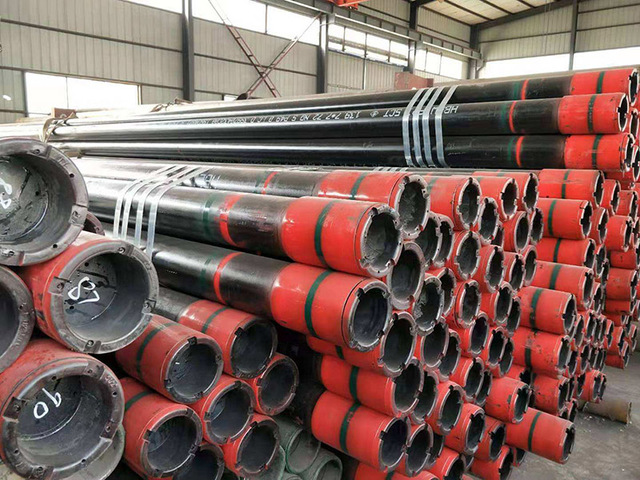
{:en}Crude Oil Pipeline Transportation System – Overview{:}{:de}Rohöl-Pipeline-Transportsystem – Überblick{:}{:pl}System transportu rurociągami ropy naftowej – przegląd{:}
{:en} Exploring the Benefits of Crude Oil Pipeline Transportation Systems Crude oil pipeline transportation systems offer a number of advantages…
{:en}
Exploring the Benefits of Crude Oil Pipeline Transportation Systems
Crude oil pipeline transportation systems offer a number of advantages over other forms of transportation. These systems are cost-effective, reliable, and safe.
Cost-Effectiveness
Pipeline transportation systems are highly cost-effective. They require minimal capital investment and have low operating costs. This makes them an attractive option for companies looking to transport large volumes of crude oil. Additionally, pipelines are not subject to the same fuel costs as other forms of transportation, such as rail or trucking. This makes them a more economical choice for long-distance transportation.
Reliability
Pipeline transportation systems are highly reliable. They are designed to operate continuously and are not subject to the same delays and disruptions as other forms of transportation. This makes them an ideal choice for companies that need to transport large volumes of crude oil on a regular basis.
Safety
Pipeline transportation systems are also highly safe. They are designed to operate with minimal risk of spills or other environmental damage. Additionally, they are monitored and maintained regularly to ensure that they are operating safely and efficiently. This makes them an attractive option for companies looking to transport crude oil in an environmentally responsible manner.
In conclusion, crude oil pipeline transportation systems offer a number of advantages over other forms of transportation. They are cost-effective, reliable, and safe. For these reasons, they are an attractive option for companies looking to transport large volumes of crude oil.
Examining the Challenges of Maintaining a Safe and Efficient Crude Oil Pipeline Transportation System
The transportation of crude oil through pipelines is a critical component of the global energy infrastructure. As such, it is essential to ensure that these pipelines are operated safely and efficiently. This requires a comprehensive approach to pipeline management that addresses the various challenges associated with maintaining a safe and efficient pipeline transportation system.
| Labels a | Calculated Mass c | ||||||||||
| Nominal Linear Mass T& C b,c | Wall Thick- ness | em, Mass Gain or Loss Due to End Finishing d | |||||||||
| Outside Diameter | Inside Diameter | Drift Diameter | Plain- end | kg | |||||||
| Round Thread | Buttress Thread | ||||||||||
| wpe | |||||||||||
| D | kg/m | t | D | mm | kg/m | Short | Long | RC | SCC | ||
| mm | mm | mm | |||||||||
| 1 | 2 | 3 | 4 | 5 | 6 | 7 | 8 | 9 | 10 | 11 | 12 |
| 13 3/8 | 48 | 339.72 | 71.43 | 8.38 | 322.96 | 318.99 | 68.48 | 15.04 | — | — 17.91 | — |
| 13 3/8 | 54.5 | 339.72 | 81.1 | 9.65 | 320.42 | 316.45 | 78.55 | 13.88 | — | 16.44 | — |
| 13 3/8 | 61 | 339.72 | 90.78 | 10.92 | 317.88 | 313.91 | 88.55 | 12.74 | — | 14.97 | — |
| 13 3/8 | 68 | 339.72 | 101.19 | 12.19 | 315.34 | 311.37 | 98.46 | 11.61 | — | 14.97 | — |
| 13 3/8 | 68 | 339.72 | 101.19 | 12.19 | 315.34 | 311.37 | 98.46 | 11.67 f | — | 14.33 | — |
| 13 3/8 | 72 | 339.72 | 107.15 | 13.06 | 313.6 | 311.15 e | 105.21 | 10.98 | — | 13.98 | — |
| 13 3/8 | 72 | 339.72 | 107.15 | 13.06 | 313.6 | 311.15 e 309.63 309.63 | 105.21 | 10.91 f | — | 14.33 | — |
| 13 3/8 | 72 | 339.72 | 107.15 | 13.06 | 313.6 | 105.21 | 10.98 | — | 13.98 | — | |
| 13 3/8 | 72 | 339.72 | 107.15 | 13.06 | 313.6 | 105.21 | 10.91 e | — | — | ||
| 16 | 65 | 406.4 | 96.73 | 9.53 | 387.4 | 382.57 | 96.73 | 18.59 | — | — 20.13 | — |
| 16 | 75 | 406.4 | 111.61 | 11.13 | 384.1 | 379.37 | 108.49 | 16.66 | — | 18.11 | — |
| 16 | 84 | 406.4 | 125.01 | 12.57 | 381.3 | 376.48 | 122.09 | 14.92 | — | — | — |
| 16 | 109 | 406.4 | 162.21 | 16.66 | 373.1 | 368.3 | 160.13 | — | — | — | |
| 18 5/8 | 87.5 | 473.08 | 130.21 | 11.05 | 450.98 | 446.22 | 125.91 | 33.6 | — | 39.25 | — |
| 20 | 94 | 508 | 139.89 | 11.13 | 485.7 | 480.97 | 136.38 | 20.5 | 27.11 | 24.78 | — |
| 20 | 94 | 508 | 139.89 | 11.13 | 485.7 | 480.97 | 136.38 | 20.61 | 27.26 g 24.27 17.84 | 24.78 | — |
| 20 | 106.5 | 508 | 158.49 | 12.7 | 482.6 | 477.82 | 155.13 | 18.22 | 22 | — | |
| 20 | 133 | 508 | 197.93 | 16.13 | 475.7 | 470.97 | 195.66 | 13.03 | 16.02 | — | |
| NOTE See also Figures D.1, D.2, and D.3. | |||||||||||
| a Labels are for information and assistance in ordering. | |||||||||||
| b Nominal linear masses, threaded and coupled (Column 4) are shown for information only. | |||||||||||
| c The densities of martensitic chromium steels (L80 Types 9Cr and 13Cr) are less than those of carbon steels; The masses shown are therefore not accurate for martensitic chromium steels; A mass correction factor of 0.989 shall be used. | |||||||||||
| d Mass gain or loss due to end finishing; See 8.5. | |||||||||||
| e Drift diameter for most common bit size; This drift diameter shall be specified in the purchase agreement and marked on the pipe; See 8.10 for drift requirements. | |||||||||||
| f Based on 758 mPa minimum yield strength or greater. | |||||||||||
| g Based on 379 mPa minimum yield strength. | |||||||||||
One of the primary challenges of maintaining a safe and efficient pipeline transportation system is the need to ensure that the pipelines are properly maintained and inspected. This includes regular inspections of the pipeline infrastructure, as well as the implementation of preventive maintenance programs to identify and address potential issues before they become major problems. Additionally, it is important to ensure that the pipelines are operated in accordance with applicable safety regulations and industry standards.
Another challenge of maintaining a safe and efficient pipeline transportation system is the need to ensure that the pipelines are operated in a manner that minimizes the risk of spills and other environmental impacts. This includes the implementation of leak detection systems, as well as the use of best practices for pipeline operations. Additionally, it is important to ensure that the pipelines are operated in a manner that minimizes the risk of human error.
| API 5CT L80 Casing Tubing Grade Color Codes | ||||
| Grade | Grade Type | Number and Color of Bands for Product a with Length ³ 1.8 m | Color(s) for Couplings | |
| Entire Coupling | Band(s) b, c | |||
| 1 | 2 | 3 | 4 | 5 |
| H40 | — | None or black band at the manufacturer’s option | None | Same as for pipe |
| J55 Tubing | — | One bright green | Bright green | None |
| J55 Casing | — | One bright green | Bright green | One white |
| K55 | — | Two bright green | Bright green | None |
| N80 | 1 | One red | Red | None |
| N80 | Q | One red, one bright green | Red | Green |
| R95 | — | One brown | Brown | None |
| L80 | 1 | One red, one brown | Red | One brown |
| L80 | 9Cr | One red, one brown, two yellow | None | Two yellow |
| L80 | 13Cr | One red, one brown, one yellow | None | One yellow |
| C90 | 1 | One purple | Purple | None |
| T95 | 1 | One silver | Silver | None |
| C110 | — | One white, two brown | White | Two brown |
| P110 | — | One white | White | None |
| Q125 | 1 | One orange | Orange | None |
| a In the case of coupling material, unless otherwise specified in the purchase agreement, the manufacturer’s internal requirements shall govern. | ||||
| b Special clearance couplings shall also have a black band. | ||||
| c Seal-ring couplings shall also have a blue band. | ||||
Finally, it is important to ensure that the pipelines are operated in a manner that maximizes efficiency. This includes the implementation of advanced technologies and systems that can help to reduce the amount of energy required to transport crude oil through the pipelines. Additionally, it is important to ensure that the pipelines are operated in a manner that minimizes the risk of downtime due to maintenance or other issues.
oil tube Wholesale-Price High-Quality high-grade China,casing pipe China high-quality ,wholesaler,casing pipe Chinese high-grade wholesaler,
By addressing these challenges, it is possible to ensure that the pipelines are operated safely and efficiently. This will help to ensure that the global energy infrastructure is able to meet the needs of the world’s population in a safe and reliable manner.{:}{:de}
Erforschung der Vorteile von Rohöl-Pipeline-Transportsystemen
Rohöl-Pipeline-Transportsysteme bieten gegenüber anderen Transportarten eine Reihe von Vorteilen. Diese Systeme sind kostengünstig, zuverlässig und sicher.
Kosteneffizienz
Pipeline-Transportsysteme sind äußerst kosteneffektiv. Sie erfordern minimale Kapitalinvestitionen und haben niedrige Betriebskosten. Dies macht sie zu einer attraktiven Option für Unternehmen, die große Mengen Rohöl transportieren möchten. Darüber hinaus fallen für Pipelines nicht die gleichen Kraftstoffkosten an wie für andere Transportarten wie Bahn oder LKW. Dies macht sie zu einer wirtschaftlicheren Wahl für den Ferntransport.
Zuverlässigkeit
Pipeline-Transportsysteme sind äußerst zuverlässig. Sie sind für den kontinuierlichen Betrieb konzipiert und unterliegen nicht den gleichen Verzögerungen und Störungen wie andere Transportmittel. Dies macht sie zur idealen Wahl für Unternehmen, die regelmäßig große Mengen Rohöl transportieren müssen.
Sicherheit
Pipeline-Transportsysteme sind außerdem äußerst sicher. Sie sind für einen Betrieb mit minimalem Risiko von Verschüttungen oder anderen Umweltschäden ausgelegt. Darüber hinaus werden sie regelmäßig überwacht und gewartet, um sicherzustellen, dass sie sicher und effizient arbeiten. Dies macht sie zu einer attraktiven Option für Unternehmen, die Rohöl auf umweltfreundliche Weise transportieren möchten.
Zusammenfassend lässt sich sagen, dass Rohöl-Pipeline-Transportsysteme eine Reihe von Vorteilen gegenüber anderen Transportarten bieten. Sie sind kostengünstig, zuverlässig und sicher. Aus diesen Gründen sind sie eine attraktive Option für Unternehmen, die große Mengen Rohöl transportieren möchten.
Untersuchung der Herausforderungen bei der Aufrechterhaltung eines sicheren und effizienten Transportsystems für Rohölpipelines
Der Transport von Rohöl durch Pipelines ist ein entscheidender Bestandteil der globalen Energieinfrastruktur. Daher ist es wichtig, sicherzustellen, dass diese Pipelines sicher und effizient betrieben werden. Dies erfordert einen umfassenden Ansatz für das Pipeline-Management, der die verschiedenen Herausforderungen angeht, die mit der Aufrechterhaltung eines sicheren und effizienten Pipeline-Transportsystems verbunden sind.
| Beschriftungen a | Berechnete Masse c | ||||||||||
| AGB für die nominale lineare Masse b,c | Wandstärke | em, Massengewinn oder -verlust durch Endbearbeitung d | |||||||||
| Außendurchmesser | Innendurchmesser | Driftdurchmesser | Plain-End | kg | |||||||
| Rundfaden | Stützfaden | ||||||||||
| wpe | |||||||||||
| D | kg/m | t | D | mm | kg/m | Kurz | Lang | RC | SCC | ||
| mm | mm | mm | |||||||||
| 1 | 2 | 3 | 4 | 5 | 6 | 7 | 8 | 9 | 10 | 11 | 12 |
| 13 3/8 | 48 | 339.72 | 71.43 | 8.38 | 322.96 | 318.99 | 68.48 | 15.04 | 17.91 | ||
| 13 3/8 | 54.5 | 339.72 | 81.1 | 9.65 | 320.42 | 316.45 | 78.55 | 13.88 | 16.44 | ||
| 13 3/8 | 61 | 339.72 | 90.78 | 10.92 | 317.88 | 313.91 | 88.55 | 12.74 | 14.97 | ||
| 13 3/8 | 68 | 339.72 | 101.19 | 12.19 | 315.34 | 311.37 | 98.46 | 11.61 | 14.97 | ||
| 13 3/8 | 68 | 339.72 | 101.19 | 12.19 | 315.34 | 311.37 | 98.46 | 11,67 f | 14.33 | ||
| 13 3/8 | 72 | 339.72 | 107.15 | 13.06 | 313.6 | 311.15 e | 105.21 | 10.98 | 13.98 | ||
| 13 3/8 | 72 | 339.72 | 107.15 | 13.06 | 313.6 | 311,15 e 309,63 309,63 | 105.21 | 10,91 f | 14.33 | ||
| 13 3/8 | 72 | 339.72 | 107.15 | 13.06 | 313.6 | 105.21 | 10.98 | 13.98 | |||
| 13 3/8 | 72 | 339.72 | 107.15 | 13.06 | 313.6 | 105.21 | 10.91 e | ||||
| 16 | 65 | 406.4 | 96.73 | 9.53 | 387.4 | 382.57 | 96.73 | 18.59 | 20.13 | ||
| 16 | 75 | 406.4 | 111.61 | 11.13 | 384.1 | 379.37 | 108.49 | 16.66 | 18.11 | ||
| 16 | 84 | 406.4 | 125.01 | 12.57 | 381.3 | 376.48 | 122.09 | 14.92 | |||
| 16 | 109 | 406.4 | 162.21 | 16.66 | 373.1 | 368.3 | 160.13 | ||||
| 18 5/8 | 87.5 | 473.08 | 130.21 | 11.05 | 450.98 | 446.22 | 125.91 | 33.6 | 39.25 | ||
| 20 | 94 | 508 | 139.89 | 11.13 | 485.7 | 480.97 | 136.38 | 20.5 | 27.11 | 24.78 | |
| 20 | 94 | 508 | 139.89 | 11.13 | 485.7 | 480.97 | 136.38 | 20.61 | 27,26 g 24,27 17,84 | 24.78 | |
| 20 | 106.5 | 508 | 158.49 | 12.7 | 482.6 | 477.82 | 155.13 | 18.22 | 22 | ||
| 20 | 133 | 508 | 197.93 | 16.13 | 475.7 | 470.97 | 195.66 | 13.03 | 16.02 | ||
| HINWEIS Siehe auch Abbildungen D.1, D.2 und D.3. | |||||||||||
| a Etiketten dienen der Information und Hilfe bei der Bestellung. | |||||||||||
| b Die nominalen linearen Massen, mit Gewinde und gekoppelt (Spalte 4), werden nur zur Information angezeigt. | |||||||||||
| c Die Dichten martensitischer Chromstähle (L80-Typen 9Cr und 13Cr) sind geringer als die von Kohlenstoffstählen; Die angegebenen Massen sind daher für martensitische Chromstähle nicht korrekt; Es ist ein Massenkorrekturfaktor von 0,989 zu verwenden. | |||||||||||
| d Massengewinn oder -verlust durch Endbearbeitung; Siehe 8.5. | |||||||||||
| e Driftdurchmesser für die gängigste Bitgröße; Dieser Stollendurchmesser ist im Kaufvertrag anzugeben und auf dem Rohr zu kennzeichnen; Siehe 8.10 für Driftanforderungen. | |||||||||||
| f Basierend auf einer Mindeststreckgrenze von 758 mPa oder mehr. | |||||||||||
| g Basierend auf einer Mindeststreckgrenze von 379 mPa. | |||||||||||
Eine der größten Herausforderungen bei der Aufrechterhaltung eines sicheren und effizienten Pipeline-Transportsystems besteht darin, sicherzustellen, dass die Pipelines ordnungsgemäß gewartet und überprüft werden. Dazu gehören regelmäßige Inspektionen der Pipeline-Infrastruktur sowie die Implementierung vorbeugender Wartungsprogramme, um potenzielle Probleme zu erkennen und zu beheben, bevor sie zu größeren Problemen werden. Darüber hinaus ist es wichtig sicherzustellen, dass die Pipelines in Übereinstimmung mit den geltenden Sicherheitsvorschriften und Industriestandards betrieben werden Gefahr von Verschüttungen und anderen Umweltauswirkungen. Dazu gehört die Implementierung von Leckerkennungssystemen sowie die Anwendung bewährter Verfahren für den Pipelinebetrieb. Darüber hinaus ist es wichtig sicherzustellen, dass die Pipelines so betrieben werden, dass das Risiko menschlicher Fehler minimiert wird.
| API 5CT L80 Gehäuseschlauch Grade-Farbcodes | ||||
| Note | Notentyp | Anzahl und Farbe der Bänder für das Produkt a mit Länge 1,8 m | Farbe(n) für Kupplungen | |
| Gesamte Kopplung | Band(s) b, c | |||
| 1 | 2 | 3 | 4 | 5 |
| H40 | Kein oder schwarzes Band nach Wahl des Herstellers | Keine | Gleiches wie für Pipe | |
| J55-Schlauch | Ein leuchtendes Grün | Hellgrün | Keine | |
| J55-Gehäuse | Ein leuchtendes Grün | Hellgrün | Ein Weißer | |
| K55 | Zwei leuchtend grüne | Hellgrün | Keine | |
| N80 | 1 | Ein Rot | Rot | Keine |
| N80 | Q | Ein Rot, ein Hellgrün | Rot | Grün |
| R95 | Ein Braun | Braun | Keine | |
| L80 | 1 | Ein Rot, ein Braun | Rot | Ein Braun |
| L80 | 9Cr | Ein Rot, ein Braun, zwei Gelb | Keine | Zwei Gelbe |
| L80 | 13Cr | Ein Rot, ein Braun, ein Gelb | Keine | Ein Gelb |
| C90 | 1 | Ein Lila | Lila | Keine |
| T95 | 1 | Ein Silber | Silber | Keine |
| C110 | Ein Weiß, zwei Braun | Weiß | Zwei Braune | |
| P110 | Ein Weißer | Weiß | Keine | |
| Q125 | 1 | Eine Orange | Orange | Keine |
| a Bei Kupplungsmaterial gelten, sofern im Kaufvertrag nichts anderes vereinbart ist, die herstellerinternen Anforderungen. | ||||
| b Kupplungen mit besonderem Spiel müssen ebenfalls ein schwarzes Band haben. | ||||
| c Dichtungsringkupplungen müssen ebenfalls ein blaues Band haben. | ||||
Schließlich ist es wichtig sicherzustellen, dass die Pipelines so betrieben werden, dass die Effizienz maximiert wird. Dazu gehört die Implementierung fortschrittlicher Technologien und Systeme, die dazu beitragen können, den Energiebedarf für den Transport von Rohöl durch die Pipelines zu reduzieren. Darüber hinaus ist es wichtig sicherzustellen, dass die Pipelines so betrieben werden, dass das Risiko von Ausfallzeiten aufgrund von Wartungsarbeiten oder anderen Problemen minimiert wird ,Mantelrohr chinesischer Qualitätsgroßhändler,
Durch die Bewältigung dieser Herausforderungen kann sichergestellt werden, dass die Pipelines sicher und effizient betrieben werden. Dies wird dazu beitragen, dass die globale Energieinfrastruktur in der Lage ist, die Bedürfnisse der Weltbevölkerung auf sichere und zuverlässige Weise zu erfüllen.{:}{:pl}
Odkrywanie zalet systemów transportu rurociągami ropy naftowej
Systemy transportu rurociągami ropy naftowej oferują szereg korzyści w porównaniu z innymi formami transportu. Systemy te są opłacalne, niezawodne i bezpieczne.
Opłacalność
Systemy transportu rurociągami są bardzo opłacalne. Wymagają minimalnych inwestycji kapitałowych i charakteryzują się niskimi kosztami eksploatacji. Czyni to je atrakcyjną opcją dla firm chcących transportować duże ilości ropy naftowej. Ponadto rurociągi nie podlegają takim samym kosztom paliwa, jak inne formy transportu, takie jak transport kolejowy czy transport samochodowy. To czyni je bardziej ekonomicznym wyborem w transporcie dalekobieżnym.
Niezawodność
Systemy transportu rurociągowego są wysoce niezawodne. Są zaprojektowane do pracy ciągłej i nie podlegają takim samym opóźnieniom i zakłóceniom jak inne formy transportu. To sprawia, że są idealnym wyborem dla firm, które muszą regularnie transportować duże ilości ropy naftowej.
Bezpieczeństwo
Systemy transportu rurociągami są również wysoce bezpieczne. Zostały zaprojektowane tak, aby działać przy minimalnym ryzyku rozlania lub innych szkód dla środowiska. Ponadto są one regularnie monitorowane i konserwowane, aby zapewnić ich bezpieczne i wydajne działanie. To czyni je atrakcyjną opcją dla firm chcących transportować ropę naftową w sposób odpowiedzialny dla środowiska.
Podsumowując, systemy transportu rurociągami ropy naftowej oferują szereg korzyści w porównaniu z innymi formami transportu. Są ekonomiczne, niezawodne i bezpieczne. Z tych powodów są atrakcyjną opcją dla firm chcących transportować duże ilości ropy naftowej.
Badanie wyzwań związanych z utrzymaniem bezpiecznego i wydajnego systemu transportu rurociągami ropy naftowej
Transport ropy naftowej rurociągami jest kluczowym elementem globalnej infrastruktury energetycznej. W związku z tym istotne jest zapewnienie bezpiecznej i wydajnej eksploatacji tych rurociągów. Wymaga to kompleksowego podejścia do zarządzania rurociągami, które uwzględnia różne wyzwania związane z utrzymaniem bezpiecznego i wydajnego systemu transportu rurociągami.
| Etykiety a | Masa obliczona c | ||||||||||
| Warunki i zasady dotyczące masy liniowej nominalnej b,c | Grubość ściany | em, Przyrost lub strata masy w wyniku wykończenia końcowego d | |||||||||
| Średnica zewnętrzna | Średnica wewnętrzna | Średnica dryfu | Zwykły koniec | kg | |||||||
| Okrągły wątek | Wątek wzmacniający | ||||||||||
| wpe | |||||||||||
| D | kg/m2 | t | D | mm | kg/m2 | Krótki | Długie | RC | SCC | ||
| mm | mm | mm | |||||||||
| 1 | 2 | 3 | 4 | 5 | 6 | 7 | 8 | 9 | 10 | 11 | 12 |
| 13 3/8 | 48 | 339.72 | 71.43 | 8.38 | 322.96 | 318.99 | 68.48 | 15.04 | 17,91 | ||
| 13 3/8 | 54.5 | 339.72 | 81.1 | 9.65 | 320.42 | 316.45 | 78.55 | 13.88 | 16.44 | ||
| 13 3/8 | 61 | 339.72 | 90.78 | 10.92 | 317.88 | 313.91 | 88.55 | 12.74 | 14.97 | ||
| 13 3/8 | 68 | 339.72 | 101.19 | 12.19 | 315.34 | 311.37 | 98.46 | 11.61 | 14.97 | ||
| 13 3/8 | 68 | 339.72 | 101.19 | 12.19 | 315.34 | 311.37 | 98.46 | 11,67 f | 14.33 | ||
| 13 3/8 | 72 | 339.72 | 107.15 | 13.06 | 313.6 | 311,15 e | 105.21 | 10.98 | 13.98 | ||
| 13 3/8 | 72 | 339.72 | 107.15 | 13.06 | 313.6 | 311,15 i 309,63 309,63 | 105.21 | 10.91 f | 14.33 | ||
| 13 3/8 | 72 | 339.72 | 107.15 | 13.06 | 313.6 | 105.21 | 10.98 | 13.98 | |||
| 13 3/8 | 72 | 339.72 | 107.15 | 13.06 | 313.6 | 105.21 | 10.91 e | ||||
| 16 | 65 | 406.4 | 96.73 | 9.53 | 387.4 | 382.57 | 96.73 | 18.59 | 20.13 | ||
| 16 | 75 | 406.4 | 111.61 | 11.13 | 384.1 | 379.37 | 108.49 | 16.66 | 18.11 | ||
| 16 | 84 | 406.4 | 125.01 | 12.57 | 381.3 | 376.48 | 122.09 | 14.92 | |||
| 16 | 109 | 406.4 | 162.21 | 16.66 | 373.1 | 368.3 | 160.13 | ||||
| 18 5/8 | 87.5 | 473.08 | 130.21 | 11.05 | 450.98 | 446.22 | 125.91 | 33.6 | 39.25 | ||
| 20 | 94 | 508 | 139.89 | 11.13 | 485.7 | 480.97 | 136.38 | 20.5 | 27.11 | 24.78 | |
| 20 | 94 | 508 | 139.89 | 11.13 | 485.7 | 480.97 | 136.38 | 20.61 | 27,26 g 24,27 17,84 | 24.78 | |
| 20 | 106.5 | 508 | 158.49 | 12.7 | 482.6 | 477.82 | 155.13 | 18.22 | 22 | ||
| 20 | 133 | 508 | 197.93 | 16.13 | 475.7 | 470.97 | 195.66 | 13.03 | 16.02 | ||
| UWAGA Patrz także rysunki D.1, D.2 i D.3. | |||||||||||
| a Etykiety mają charakter informacyjny i ułatwiają składanie zamówienia. | |||||||||||
| b Nominalne masy liniowe, gwintowane i łączone (kolumna 4) podano wyłącznie w celach informacyjnych. | |||||||||||
| c Gęstości martenzytycznych stali chromowych (L80 typy 9Cr i 13Cr) są mniejsze niż stali węglowych; Dlatego też podane masy nie są dokładne dla martenzytycznych stali chromowych; Należy zastosować współczynnik korekcji masy wynoszący 0,989. | |||||||||||
| d Przyrost lub ubytek masy w wyniku wykończenia końcowego; Patrz 8.5. | |||||||||||
| e Średnica dryfu dla najpopularniejszych rozmiarów bitów; Średnicę wywiertu należy określić w umowie kupna i zaznaczyć na rurze; Wymagania dotyczące dryfu podano w 8.10. | |||||||||||
| f W oparciu o minimalną granicę plastyczności 758 mPa lub większą. | |||||||||||
| g W oparciu o minimalną granicę plastyczności 379 mPa. | |||||||||||
Jednym z głównych wyzwań związanych z utrzymaniem bezpiecznego i wydajnego systemu transportu rurociągami jest konieczność zapewnienia właściwej konserwacji i kontroli rurociągów. Obejmuje to regularne inspekcje infrastruktury rurociągów, a także wdrażanie programów konserwacji zapobiegawczej w celu identyfikacji i rozwiązania potencjalnych problemów, zanim staną się one poważnymi problemami. Dodatkowo ważne jest zapewnienie eksploatacji rurociągów zgodnie z obowiązującymi przepisami bezpieczeństwa i normami branżowymi.
Kolejnym wyzwaniem związanym z utrzymaniem bezpiecznego i wydajnego systemu transportu rurociągami jest konieczność zapewnienia eksploatacji rurociągów w sposób minimalizujący ryzyko wycieków i innych skutków dla środowiska. Obejmuje to wdrożenie systemów wykrywania wycieków, a także wykorzystanie najlepszych praktyk w zakresie eksploatacji rurociągów. Dodatkowo ważne jest zapewnienie eksploatacji rurociągów w sposób minimalizujący ryzyko błędu ludzkiego.
| Rura osłonowa API 5CT L80 Kody kolorów stopni | ||||
| Ocena | Typ oceny | Liczba i kolor pasków dla produktu a z długością 1,8m | Kolor(y) złączy | |
| Całe sprzęgło | Zespół(y) b, c | |||
| 1 | 2 | 3 | 4 | 5 |
| H40 | Brak lub czarny pasek według uznania producenta | Brak | Tak samo jak dla rury | |
| Przewód J55 | Jeden jasnozielony | Jasnozielony | Brak | |
| Obudowa J55 | Jeden jasnozielony | Jasnozielony | Jeden biały | |
| K55 | Dwa jasnozielone | Jasnozielony | Brak | |
| N80 | 1 | Jeden czerwony | Czerwony | Brak |
| N80 | P | Jeden czerwony, jeden jasnozielony | Czerwony | Zielony |
| R95 | Jeden brązowy | Brązowy | Brak | |
| L80 | 1 | Jeden czerwony, jeden brązowy | Czerwony | Jeden brązowy |
| L80 | 9Cr | Jeden czerwony, jeden brązowy, dwa żółte | Brak | Dwa żółte |
| L80 | 13Cr | Jeden czerwony, jeden brązowy, jeden żółty | Brak | Jeden żółty |
| C90 | 1 | Jeden fioletowy | Fioletowy | Brak |
| T95 | 1 | Jedno srebro | Srebro | Brak |
| C110 | Jeden biały, dwa brązowe | Biały | Dwa brązowe | |
| P110 | Jeden biały | Biały | Brak | |
| Q125 | 1 | Jedna pomarańcza | Pomarańczowy | Brak |
| a W przypadku materiału sprzęgającego, o ile w umowie kupna nie określono inaczej, zastosowanie mają wewnętrzne wymagania producenta. | ||||
| b Sprzęgła ze specjalnym luzem powinny mieć również czarny pasek. | ||||
| c Złącza z pierścieniem uszczelniającym powinny mieć również niebieską opaskę. | ||||
Na koniec ważne jest zapewnienie eksploatacji rurociągów w sposób maksymalizujący wydajność. Obejmuje to wdrażanie zaawansowanych technologii i systemów, które mogą pomóc w zmniejszeniu ilości energii potrzebnej do transportu ropy naftowej rurociągami. Ponadto ważne jest, aby zapewnić eksploatację rurociągów w sposób minimalizujący ryzyko przestojów spowodowanych konserwacją lub innymi problemami.
rura olejowa cena hurtowa wysokiej jakości wysokiej jakości Chiny, rura osłonowa Chiny wysokiej jakości, hurtownik ,Casing Pipe, chińska hurtownia wysokiej jakości,
Sprostając tym wyzwaniom, można zapewnić bezpieczną i wydajną eksploatację rurociągów. Pomoże to zapewnić, że globalna infrastruktura energetyczna będzie w stanie zaspokoić potrzeby ludności świata w sposób bezpieczny i niezawodny.{:}