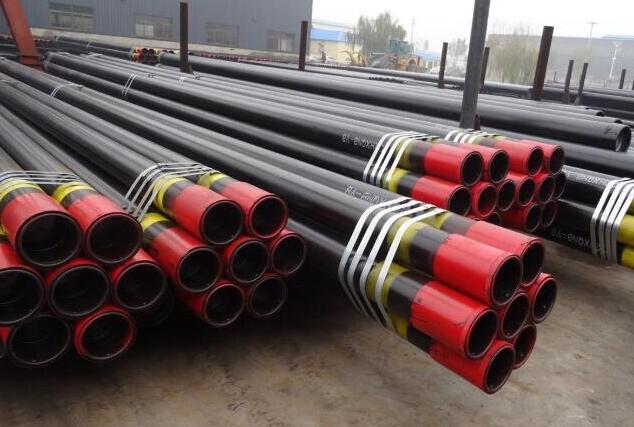
Multiple attributes of oil casing, do you genuinely know the selection principle?
understanding the multiple attributes of oil casing: An in-depth exploration Understanding the Multiple Attributes of Oil Casing: An In-depth Exploration…
understanding the multiple attributes of oil casing: An in-depth exploration
Understanding the Multiple Attributes of Oil Casing: An In-depth Exploration
Oil casing, an integral part of any drilling operation, plays a significant role in guaranteeing the smooth completion of the drilling process and further production tasks. The oil casing assists in consolidating the well, preventing the formation from collapsing while maintaining the drilling mud’s fluidity. The selection of oil casing requires an in-depth understanding of its multiple attributes, making it a paramount task.
Several vital parameters profoundly influence an oil casing’s selection \\u2013 size, weight, grade, and connection type. Size, denoting the casing’s external diameter, is a critical attribute. The choice hangs on the anticipated well depth, pressure, and drilling equipment varied specifications. Ultimately, the casing size directly affects the production volume. A smaller casing means a lower production capacity and vice versa.
The casing weight is another major feature, representing the casing body’s wall thickness. Here, a heavier casing fuels higher bearing strength but with a lesser internal diameter, impacting the extraction pump’s size and consequentially the production rate. Conversly, a lighter casing raises the internal diameter but compromises on casing’s strength. Therefore, a deliberate balance is required in selecting the casing weight, considering the well’s depth and anticipated reservoir pressure.
Further up in the casing attributes are casing grade and connection type. The casing grade categorizes casing Tubing strength levels, contributing to successful installation and sustained operation. grades range from standard to higher grades, with various grades offering different strengths and resilience levels. The selection hence follows the predicted downhole conditions \\u2014 higher pressures and temperatures demand higher grade casings.
The connection type, the design of the Threads at the Pipe ends, is vital in ensuring casing integrity. There are mainly two types, round thread and buttress thread. Round threads provide a strong, tight Seal essential in wells with high pressure. Buttress threads are suitable in deeper, higher pressure wells, offering higher axial strength and sealing abilities. Hence, the anticipated operating conditions help determine the suitable thread type.
 however, the selection of oil casing does not solely rest on these parameters alone. The geographical location, its profound impact on the material\\u2019s corrosivity, and consequently casing life, are crucial considerations. The casing’s failure can result in detrimental consequences, making its careful selection a matter of high importance.
In conclusion, the selection of oil casing involves an intricate understanding of multiple attributes. Balancing various parameters such as size, weight, grade, and connection is key to success. Equally important is understanding the geographical location and the anticipated operating conditions. Each attribute plays a distinct role in maintaining casing integrity and ensuring smooth drilling operations. Consequently, sound knowledge of oil casing selection is a prerequisite to guarantee safe and efficient operations.
Selection Principle of Oil Casing: A comprehensive guide
The Oil and gas industry is not just about refining petroleum or drilling wells. Every aspect of the procedure has exact science and detailed principles behind it, including the selection of oil casing. The selection principle of oil casing is rooted deeply in an understanding of its multiple attributes, its various applications, and the specific conditions at hand.
API 5ct T95 CASING Best china wholesalerOil casing is an essential tool in oil drilling and its main function is to make the oil, gas wells drilling, sealed and maintained pressure to avoid the stratum fluid flowing into the drill hole. With such a pivotal role, the selection of the right casing becomes a topic of great interest. First and foremost, one needs to grasp the understanding of casing grades. While the american Petroleum institute (API) sets the standard grades, one must choose the grade based on parameters like well depth, oil type, and drilling environment.
The diameter of the casing is another attribute that requires attention. The appropriate diameter can resolve significant issues like drilling difficulties or troubles in well completion. A wrong choice can lead to excessive production costs or worse, accidents at the drill site. Then comes casing thickness, or weight, as it’s referred to in the industry. This depends on the pressure and temperature conditions. The right thickness ensures the casing can withstand conditions such as well pressure, possible and explosive bursts or corrosive elements.
The connection type of casing is another dimension to consider during the selection process. Connections can be threaded or coupled, with both types having their pros and cons. The choice here largely depends on the type of well and the specific requirements of the operation.
what adds to the complexity of oil casing selection is the condition of the strata being drilled. If the stratum is brittle, then a casing with strong anti-collapsibility is needed. If corrosive elements are present, then the casing needs to be corrosion resistant. The presence of hydrogen sulfide necessitates a casing with sour service.
Lastly, the cost comes into play. While deciding on the casing, considerations about whether the casing will be cost-effective in the long run must be mindful. This could relate to durability, reducing Maintenance costs, or improved efficiency that speeds up the drilling operation.
In retrospect, oil casing selection is not a simple process. At the base of it is an understanding of its varied attributes, the conditions of drilling and a foresight about the performance expected. Each choice has its ramifications, sometimes extending to the success or failure of a drilling operation. With technology advancing, oil casing selection may involve new variables in the future. However, the basic principles will endure. Thus, knowing the fundamental principles of oil casing selection is an asset in the thriving oil and gas industry.