
comment le tubage est-il installé dans un puits ?
Étapes impliquées dans l’installation du tubage dans un puits L’installation du tubage dans un puits est un processus critique qui…
Étapes impliquées dans l’installation du tubage dans un puits
L’installation du tubage dans un puits est un processus critique qui garantit l’intégrité et la stabilité du puits de forage, protégeant l’environnement et maximisant l’efficacité de l’extraction des ressources. Cet article approfondit les étapes complètes impliquées dans l’installation minutieuse du tubage, mettant en lumière la précision et l’expertise requises dans cet aspect essentiel des opérations de forage.
Le processus commence par le forage du puits à la profondeur souhaitée, où la première un forage a été creusé. Une fois que le forage atteint la profondeur cible, l’étape suivante consiste à préparer le puits de forage pour l’installation du tubage. Il s’agit de nettoyer et de dégager le forage de tout débris ou obstruction pouvant gêner la descente du tubage.
Le premier train de tubage, appelé tubage conducteur, est ensuite inséré dans le puits. Cette enveloppe, généralement de plus grand diamètre que les cordes ultérieures, remplit plusieurs fonctions cruciales. Il empêche les parois du puits de s’effondrer, en particulier dans les formations instables, et fournit un support structurel aux colonnes de tubage ultérieures. L’enveloppe du conducteur permet également d’isoler les zones d’eau souterraine peu profondes et potentiellement contaminées des formations plus profondes auxquelles on aura accès pendant la production.
Une fois l’enveloppe du conducteur posée et cimentée, la phase suivante consiste à forer plus profondément dans la formation. Au fur et à mesure que le forage progresse, des colonnes de tubage supplémentaires sont installées séquentiellement. Chaque colonne de tubage suivante est de plus petit diamètre et est descendue dans le puits de forage jusqu’à la profondeur souhaitée. Ce processus se poursuit jusqu’à ce que le train de tubage final, souvent appelé tubage de production, soit installé sur toute la profondeur du puits.
importance d’une installation correcte du tubage dans la construction d’un puits
TUYAU D’ENVELOPPEMENT DE PÉTROLE Meilleurs exportateurs chinois
En conclusion, une installation appropriée du tubage est indispensable au succès des projets de construction de puits dans les secteurs de l’énergie et de l’eau. Il constitue l’élément fondamental qui soutient des opérations de forage sûres et efficaces, protège les ressources en eaux souterraines et facilite la production de précieuses ressources en hydrocarbures et en eau. À mesure que la technologie et les normes industrielles continuent d’évoluer, l’importance d’une installation méticuleuse du tubage reste primordiale pour garantir un développement durable et responsable des ressources pour les générations futures.
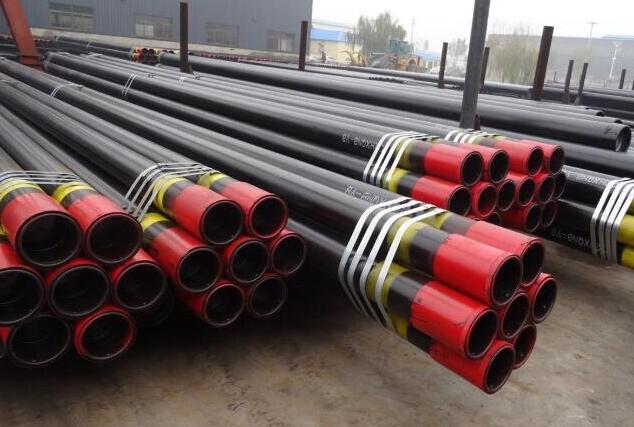
The importance of casing begins with the initial drilling phase. As the drill penetrates various geological formations, casing serves as a structural support to prevent the wellbore from caving in. This is particularly crucial in formations where the surrounding rock or sediment lacks sufficient stability to maintain an open hole. By securely lining the wellbore with casing, operators create a stable conduit through which further drilling, completion, and production activities can proceed safely and effectively.
Moreover, casing plays a pivotal role in safeguarding groundwater resources. One of its primary functions is to isolate different geological strata to prevent cross-contamination of fluids between formations. This isolation is achieved through Cementing the casing in place, forming a hydraulic Seal that prevents the migration of undesirable fluids, such as brines or hydrocarbons, into aquifers or other sensitive zones. Thus, proper casing installation not only protects the environment but also ensures compliance with regulatory requirements aimed at preserving water quality and preventing environmental damage.
In addition to structural and environmental considerations, casing installation is crucial for well productivity and longevity. The Casing string provides a conduit for production fluids to flow from the reservoir to the surface while maintaining wellbore stability. Proper casing design and installation facilitate efficient production operations by minimizing the risk of equipment damage, such as casing collapse or corrosion, which can compromise well performance and necessitate costly interventions.
The process of casing installation typically begins with selecting the appropriate casing size and material based on the anticipated well conditions, including depth, pressure, and geological characteristics. Casing strings are typically composed of high–strength steel alloys designed to withstand the mechanical stresses encountered during drilling, completion, and production phases. Each section of casing is sequentially lowered into the wellbore and cemented in place to create a continuous and secure barrier.
Furthermore, casing installation involves meticulous quality control and assurance measures to verify the integrity of the casing string. This includes conducting pressure tests to ensure the casing can withstand the anticipated downhole pressures without leaking or failing. In some cases, advanced technologies such as casing inspection tools or electromagnetic casing evaluation tools may be employed to assess casing integrity and detect potential defects or anomalies that could compromise well performance.
Ultimately, the installation of casing is not merely a technical procedure but a critical determinant of well integrity, operational safety, and environmental protection. By adhering to best practices and industry standards for casing design and installation, operators can mitigate risks, enhance operational efficiency, and ensure the long-term viability of oil, gas, and water wells worldwide.
petroleum casing Pipe Best china Exporters
In conclusion, proper casing installation is indispensable to the success of well construction projects across the energy and water sectors. It serves as the foundational element that supports safe and efficient drilling operations, protects groundwater resources, and facilitates the production of valuable hydrocarbon and water resources. As technology and industry standards continue to evolve, the importance of meticulous casing installation remains paramount in ensuring sustainable and responsible resource development for future generations.


