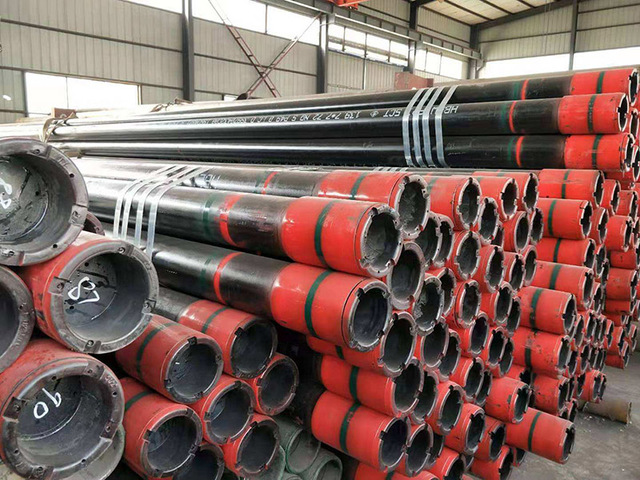
La splendide exclusivité du forage en haute mer : un boîtier d'huile ultra résistant et résistant à la corrosion.
Avantages du tubage pétrolier ultra-résistant à la corrosion dans le forage en haute mer impact environnemental et durabilité des technologies…
Avantages du tubage pétrolier ultra-résistant à la corrosion dans le forage en haute mer
impact environnemental et durabilité des technologies de forage en haute mer
Fabricants de tuyaux de tubage
De plus, l’utilisation de matériaux aussi avancés contribue à la longévité et à l’efficacité des infrastructures de forage en haute mer. En prolongeant la durée de vie des carters pétroliers et d’autres composants critiques, les opérateurs peuvent optimiser leurs investissements et réduire la fréquence des opérations de Maintenance coûteuses, améliorant ainsi la viabilité économique des projets d’exploration pétrolière en haute mer.
perspectives futures et innovations dans la technologie des tubages pétroliers en haute mer
En outre, l’intégration de technologies intelligentes telles que les capteurs et l’analyse prédictive améliore la surveillance et la maintenance des systèmes de tubage pétrolier en haute mer. La collecte de données en temps réel sur l’intégrité du boîtier et les conditions environnementales permet des stratégies de maintenance proactives, réduisant ainsi le risque de temps d’arrêt coûteux ou d’incidents environnementaux. Ces progrès améliorent non seulement l’efficacité opérationnelle, mais contribuent également à la sécurité globale et à la durabilité des opérations de forage en haute mer.
Pour l’avenir, l’avenir de la technologie de tubage pétrolier en haute mer semble prêt pour une innovation continue. Les chercheurs explorent les applications des nanotechnologies pour améliorer davantage les propriétés des matériaux, notamment leurs capacités d’auto-guérison et leur résistance accrue à la fatigue et à l’érosion. De plus, les progrès de la robotique et des systèmes autonomes promettent de révolutionner les procédures d’inspection et de maintenance, permettant des évaluations plus fréquentes et plus approfondies de l’intégrité du boîtier sans intervention humaine.
Alors que la demande mondiale d’énergie continue de croître, l’évolution de la technologie du tubage pétrolier en haute mer reste cruciale pour exploiter les vastes réserves situées sous le fond océanique. La recherche continue de matériaux plus solides et plus résistants à la corrosion et de techniques de fabrication avancées souligne un engagement en faveur de la durabilité et de l’efficacité dans l’exploration pétrolière et gazière offshore. En exploitant ces innovations, l’industrie peut relever les défis du forage en haute mer avec plus de confiance, garantissant ainsi un approvisionnement énergétique fiable et résilient pour les générations à venir.

From an environmental standpoint, the adoption of ultra-strong, corrosion-resistant oil casing represents a significant step forward in promoting sustainable practices within the Oil and gas industry. By minimizing the risk of leaks and spills, these technologies help protect marine ecosystems and biodiversity, which are particularly vulnerable to the adverse effects of hydrocarbon contamination. Furthermore, their durability reduces the need for frequent replacement and Repair, thereby reducing the overall environmental impact associated with the production and disposal of drilling equipment.
however, despite these advancements, the environmental impact of deep-sea drilling remains a subject of intense scrutiny and debate. Critics argue that even with advanced technologies, the inherent risks of accidents and ecosystem disturbances cannot be entirely eliminated. Therefore, rigorous regulatory frameworks and monitoring protocols are essential to ensure that deep-sea drilling activities adhere to strict environmental standards and mitigation measures.
In conclusion, the development and deployment of ultra-strong, corrosion-resistant oil casing represent a commendable effort towards enhancing the environmental sustainability and operational efficiency of deep-sea drilling technologies. While these innovations mitigate many of the traditional risks associated with offshore oil extraction, they also underscore the ongoing need for responsible stewardship and technological innovation in the pursuit of global energy security. As the industry continues to evolve, collaboration between stakeholders, including governments, industry leaders, and environmental advocates, will be essential to strike a balance between energy development and environmental conservation in our increasingly interconnected world.
Future prospects and Innovations in Deep-Sea Oil Casing technology
Deep-sea drilling operations represent a frontier of technological innovation crucial to meeting global energy demands. At the heart of this industry’s advancements lies the development of ultra-strong, corrosion-resistant oil casing—a vital component ensuring the integrity and longevity of deep-sea wells. As exploration ventures deeper into oceans and subsea reservoirs, the challenges posed by extreme pressures, corrosive environments, and operational longevity become more pronounced. In response, engineers and materials scientists are pushing the boundaries of material technology to create casing solutions that can withstand these harsh conditions.
Traditionally, oil casings have been primarily composed of steel alloys due to their strength and durability. However, the corrosive nature of seawater, combined with the high pressures and temperatures encountered in deep-sea environments, necessitates materials capable of unprecedented resilience. This has led to the development of advanced alloys and composite materials that offer superior Corrosion resistance while maintaining structural integrity under immense pressure.
One of the most promising advancements in deep-sea oil casing technology is the use of titanium alloys. Titanium’s exceptional strength-to-weight ratio and outstanding corrosion resistance make it an ideal candidate for deep-sea applications where conventional steels may falter. Innovations in metallurgy have further enhanced titanium alloys, making them capable of withstanding the corrosive effects of seawater over extended periods without compromising on performance.
Moreover, composite materials incorporating carbon fibers or ceramics have emerged as viable alternatives to traditional metals. These composites offer significant weight reduction benefits while maintaining robust mechanical properties and corrosion resistance. This not only reduces operational costs associated with deployment and maintenance but also extends the operational lifespan of deep-sea wells by mitigating corrosion-related risks.
In tandem with material advancements, innovations in manufacturing processes have streamlined the production of complex casing designs tailored to specific deep-sea environments. Additive manufacturing, or 3D printing, has revolutionized the fabrication of intricate casing geometries with minimal material waste. This capability allows for the creation of customized casing solutions that optimize performance and reliability in challenging subsea conditions.
Furthermore, the integration of smart technologies such as sensors and predictive analytics is enhancing the monitoring and maintenance of deep-sea oil casing systems. real-time data collection on casing integrity and environmental conditions enables proactive maintenance strategies, reducing the risk of costly downtime or environmental incidents. These advancements not only improve operational efficiency but also contribute to the overall safety and sustainability of deep-sea drilling operations.
looking ahead, the future of deep-sea oil casing technology appears poised for continued innovation. researchers are exploring nanotechnology applications to further enhance material properties, including self-healing capabilities and enhanced resistance to fatigue and erosion. Additionally, advancements in robotics and autonomous systems promise to revolutionize inspection and maintenance procedures, allowing for more frequent and thorough assessments of casing integrity without human intervention.
As the global demand for energy continues to grow, the evolution of deep-sea oil casing technology remains crucial for unlocking the vast reserves lying beneath the ocean floor. The ongoing pursuit of stronger, more corrosion-resistant materials and advanced manufacturing techniques underscores a commitment to sustainability and efficiency in offshore oil and gas exploration. By harnessing these innovations, the industry can navigate the challenges of deep-sea drilling with greater confidence, ensuring a reliable and resilient energy supply for generations to come.